"Can’t Hide Secretly" Sang Zhi’s father is not simple, from Taiwan, China, and the marriage between the old and the young is not happy

Chen Zheyuan and Zhao Lusi starred in the little sweet drama "Can’t Hide Secretly", which gained a high popularity. The reason why this drama is so popular is that the emotional drama is very sweet, and the casting of the drama is also very suitable. From the protagonist to the supporting role, the actor and role of "Can’t Hide Secretly" are very well adapted.

In "Can’t Hide Secretly", Sang Zhi’s family atmosphere is very good, her parents love her, her brother dotes on her, and the family of Sang are in the same box, so the audience will feel very warm, and the family drama is also a major attraction of this drama. Sang Zhi’s father is played by actor Qiu Xinzhi in "Can’t Hide Secretly". Although there are not many scenes, Qiu Xinzhi’s performance in the play has left a deep impression on the audience.

"Can’t Hide Secretly" Sang Fu is a very elegant man, and his career is very successful. He supports the whole family in the mulberry family and the mulberry mother, and he and his wife are very loving and very fond of his daughter Sang Zhi. Whether it is delicious or fun, Sang Fu will think about Sang Zhi.

"Can’t Hide Secretly" is played by Ceng Li. In the play, Qiu Xinzhi and Ceng Li, the middle-aged CP, are also very eye-catching, which is a beautiful scenery in the play; And Qiu Xinzhi plays dad for Zhao Lusi, and the two of them are very harmonious and have a sense of atmosphere.

Although there are not many scenes of Qiu Xinzhi in Hiding Secretly, when it comes to Qiu Xinzhi, he is not simple. Many audiences are familiar with him. Qiu Xinzhi was born in 1968 and is an actor from Taiwan, China. Qiu Xinzhi made his debut at the age of 25, because his face value was relatively high. When he made his debut, he was deeply favored by idol dramas. After many years of debut, Qiu Xinzhi played many roles in film and television dramas that the audience liked.

In the TV series Romantic Tang Bohu, Qiu Xinzhi collaborates with Tongshu Yang, in which he plays the leading actor Tang Bohu. In Wutong Rain, Qiu Xinzhi plays Shen Yan, a lame gentleman of the Shen family, who is smothered by maternal love and has a complicated personality. In "Yang Naiwu and Chinese Cabbage", Qiu Xinzhi plays the leading role of Yang Naiwu and Qiu Xinzhi, who is deeply rooted in people’s hearts. However, Qiu Xinzhi is widely known by the mainland audience, and still has a close relationship with Qiong Yao.

In 2011, Qiong Yao made a remake of Princess Huanzhu, and Qiu Xinzhi played the role of Emperor Ama instead of Zhang Tie-Lin. Although there are many slots in Princess Huanzhu, Qiu Xinzhi’s gentle temperament adds bright colors to Emperor Ama, and this role also makes Qiu Xinzhi known to more audiences.

In recent years, with the growth of age, Qiu Xinzhi began to play supporting roles, because Yan value is still resistant to beating, and figure management is also good. Now Qiu Xinzhi’s film and television drama resources are very good. He cooperates with many flowing actors and plays for young actors. Qiu Xinzhi is also a professional father now.

Sean Xiao’s father in Douluo Continent; Li Yitong’s father is played in "Crane’s Hua Ting"; Lingzi Liu’s father in "Qing Qing Daily"; And "A Fierce Sword in the Snow" also has a lot of fate with Ruoyun Zhang. Qiu Xinzhi also gave wonderful performances in such plays as Breaking the Sky, Elite Lawyers and Ordinary Road.

Qiu Xinzhi’s acting career has developed smoothly, but his emotional career is not smooth. His emotional experience has been talked about for many years. Qiu Xinzhi had a marriage, because he participated in the drama "Flower Girl", and he met Wang Yixuan, who was 10 years younger than himself. Wang Yixuan admired Qiu Xinzhi very much. This relationship of "matching the young and the old" was not valued at first. However, in the end, this relationship won the support of Wang Yixuan’s parents, and Qiu Xinzhi was also called "one in a million" by Wang Yixuan’s parents. After marrying Qiu Xinzhi, Wang Yixuan gradually shifted his focus to his family. Unfortunately, the relationship ended in failure.

After Qiu Xinzhi and Wang Yixuan divorced, they had an affair with actor Guan Renzi. They played the Valley Master and the Maid in The Condor Heroes, and Qiu Xinzhi was 24 years older than Guan Renzi. It seems that Qiu Xinzhi is still very partial to his little girl. However, the relationship between Qiu Xinzhi and Guan Renzi has not been recognized by the parties concerned, and with the passage of time, this scandal has also gone away.

In Can’t Hide Secretly, Qiu Xinzhi plays Sang Fu who has a warm home, a loving lover and a lovely daughter, but off-stage, his feelings are full of twists and turns, which really makes people sigh. The plot of "Can’t Hide Secretly" is still wonderful, and I look forward to Qiu Xinzhi’s follow-up plot, which will have wonderful performance.

Revealing the future trend of the consumer industry, three major trends deserve the attention of catering people.

  Consumption has become the main driving force of China’s economic growth, and there is still room for further exploration in all fields and links of consumption.

  This article is a record of Yang Sulan’s speech at the "2024 China Catering Industry Summit", which was compiled and published by Red Dining Network.

  This year is the twentieth year that I have been engaged in capital business. In 2004, after I graduated from Peking University, I went to Hong Kong and started working in the capital market. In the past twenty years, I have witnessed the development and changes of China’s economy and capital market, and I am also glad to have the opportunity to participate in many domestic and overseas listing, financing and M&A projects of China’s head enterprises, and have served many well-known enterprises, such as Nongfu Spring, Anta, Helens, Pot Circle, Zhenjiu Lidu, Shunfeng, Jitu and so on.

  In the past twenty years, China’s economy has taken off rapidly, and great changes have taken place in the consumer industry. Especially in the past decade, with the progress of science and technology in the fields of Internet, AI, media and logistics, it has greatly promoted the rapid development and transformation of the consumer industry. There have been many changes in trading methods, trading places, logistics and transportation, digital application and so on.

01. In the past decade, the consumer industry has witnessed rapid development and change.

  In terms of payment methods, the development of smart phones and communication technologies has prompted great changes in payment methods. China society has basically changed from cash payment to mobile payment, and electronic payment has become the mainstream. Payment is more convenient, which is a very big change.

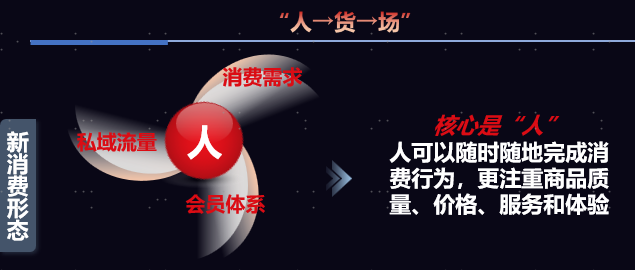
  In terms of trading places, many of them used to go to supermarkets and shopping malls, but now most of them have been transformed into online consumption. Such changes have also prompted the whole transaction to change in terms of people, goods and fields. The traditional consumption pattern used to be "goods → field → people" or "field → goods → people", but now the new consumption pattern has become "people → goods → field" and the core has become "people". The development of science and technology shortens the distance between people and goods, making it easier for goods to reach consumers.
  In terms of logistics and transportation, the development and upgrading of logistics technology has provided important infrastructure for changes in consumption, transactions and other aspects. In the past ten years, there have been many express delivery companies in China, including SF Express and Polar Rabbit. They have made great contributions to the development of Internet transactions. Without the emergence of these efficient and low-cost logistics, e-commerce and online transactions would not have developed to this extent today.

  Here is also an interesting phenomenon. In Europe, America, Japan and other countries with advanced technology, their online transactions or online purchases are not as popular as those in China. Why? I think there are two reasons behind this: First, the logistics cost of these countries, or the labor cost, is very high, and it is difficult for them to do logistics at a very low cost. Under the background of big environment, their online transaction costs will be very high, so they will not develop as fast as China’s logistics, which is the cost reason. On the other hand, people in these countries have higher requirements for digital privacy.

  The development of science and technology has also greatly changed the operation of enterprises, especially the digital application. Using digital system, restaurants can achieve more refined management in personnel management, checking store revenue, product marketing and other aspects. It is also based on the application of digitalization that has spawned more chain catering brands.

  In terms of products and packaging, the development of science and technology has also brought many changes, such as the appearance of self-heating hot pot and prefabricated products. The packaging of many products is becoming more and more beautiful now.

  In the past decade, the proportion of consumption in GDP has been rising, and consumption has gradually become the main driving force for China’s economic growth. Especially last year, the contribution rate of consumption to the overall economic growth has reached 82.5%. This year’s two sessions also made clear arrangements for promoting the steady growth of consumption, and encouraging policies in various consumer-related fields such as cross-border e-commerce, tax exemption for outlying islands, new energy vehicles, and cultural tourism were introduced one after another.

02. With the disappearance of demographic dividend and intensified competition, the consumer industry is facing new challenges.

  The progress of science and technology has promoted the continuous growth of the consumption field, and various sub-sectors of consumption have now blossomed. For example, there are many excellent enterprises in the catering field, such as: Haidilao, Honey Snow Ice City, Cookware Food Exchange, and tasteless food.

  Will technology continue to promote the development of the consumer industry in the next decade? What are the development opportunities in the consumption field? Before answering these questions, it is necessary to look at the challenges that China’s consumer industry is facing after the rapid growth in the past decade.

  From a macro perspective, the birth rate is declining, the population structure of China is gradually aging, and the growth rate of the total retail sales of consumer goods in the whole society is also slowing down, which is what we usually call "the demographic dividend is disappearing".

  At the micro level, on the supply side, the competition among enterprises has become increasingly fierce, which is what everyone calls "becoming a special volume". For example, in the coffee track, many new coffee brands have emerged in the past two years; There is also tea. There is basically no shortage of tea shops in various cities, and some tea brands are also sprinting to the market. The fierce competition has brought more and more severe tests to the supply side. Only by doing a good job can enterprises survive and develop.

  On the demand side, after 10 years of development, consumers’ tastes have become higher and their requirements have become higher. In the future, everyone’s requirements for products will only become higher and higher, and consumers’ consumption preferences and behaviors are also rapidly changing and adjusting.

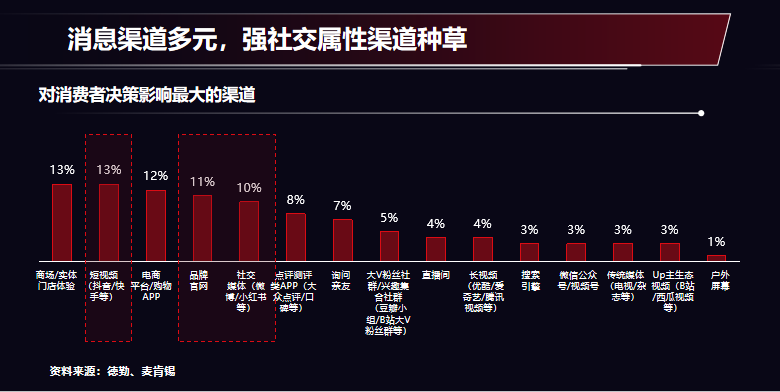
  In the analysis of consumer behavior portraits, after investigation and statistics by professional institutions, it is found that consumers’ choices have become more rational now. Surveys conducted by Deloitte and McKinsey also show that consumers now prefer products that they really need and are cost-effective.
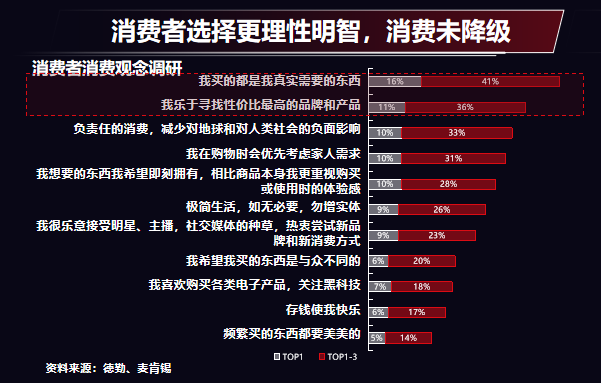
  When choosing a specific product, consumers will first consider the quality and function of the product, then the price, and then the emotional value and brand.

  From the perspective of channels, consumers receive more and more information, and the channels for receiving information are becoming more and more diversified. There are more than 10 common channels for obtaining information, including e-commerce, shopping malls, live broadcasts and so on. This also means that there are more and more marketing channels for brands, because it is difficult to gain public recognition and recognition by marketing only through one channel.
  In addition, consumers’ preference for domestic brands is also increasing. Back to ten years ago, or earlier, China consumers had a high degree of favor for overseas brands, and they thought that the quality of "foreign goods" was good. But in the last decade, especially in the last five years, domestic brands are slowly rising and winning the favor of more and more consumers.

  To give a few typical examples, such as baby milk powder, we made a statistic and compared the milk powder market in 2013 and 2021. We will find that overseas milk powder accounted for more than 50% in the whole China market in 2013, but by 2021, the market share of domestic milk powder brands exceeded 50%, surpassing foreign brands; The use of mobile phones is also obvious. In the past, everyone liked to use overseas brands such as Nokia and Apple, but now the market share of mobile phones in China has exceeded 60%. There is also the field of fast food. The rise of local brands in China in recent years is very obvious, and the proportion of local fast food brands in the whole market is also increasing.

  Finally, look at the capital level, the amount of social financing is also decreasing. In the communication with entrepreneurs, everyone generally said that private equity financing is getting harder and harder, and it is getting harder and harder to get money at the capital level.

  All these have brought new challenges to the consumer industry in China.

  03. In the next decade, three major trends in the consumer industry deserve attention.

  Despite the challenges, technology will continue to affect consumption in the next decade. There are still opportunities in all fields and links of consumption. Mainly in three aspects:

  1, intelligent

  Intelligentization is a major direction for the development of the whole society in the future. Intelligentization can reduce costs, improve efficiency, improve cost performance and improve product functions, which are exactly what consumers need. As a consumer goods enterprise, if it wants to achieve good development, it must be recognized by consumers, and it is necessary to make more efforts in intelligence.

  Specifically, intelligence will occur in many fields, including production, retail, catering, warehousing and so on.

  For example, in the production field, the production of products will be further automated. For an enterprise like Nongfu Spring, there are few workers in its workshop, and it will adopt automatic packaging and intelligent production, and many production links are realized by machines.

  In the field of catering, scanning code to order food is very common, which is also an intelligent performance. In the future, there may be automatic food delivery machines, vending machines and automatic checkout machines. There will be automatic brewing machines, milk tea machines and so on in the drink shop.

  In the field of warehousing, autonomous driving may be more used in transportation in the future, and warehouses can also be made fully intelligent, and intelligent management can be implemented for the storage and transportation of goods.

  In the field of smart home appliances, although the current development of real estate has encountered some problems, there is still a demand for personalized and convenient home experience, so there is still room for development in the smart home market.

  2. Nationalization

  As mentioned earlier, domestic brands are winning the market, the quality of local brands is recognized, and the proportion of domestic products is also increasing, but I think this proportion is not high enough and can be higher in the future. Taking food and beverage as an example, Coca-Cola and Pepsi occupy a large market share, while the share of domestic brands is still low, so there is still much room for exploration in the future.

  The consumer market has changed from an incremental market to a stock market, and may even be a reduction market. In today’s market economy environment, there are still many opportunities in the consumer industry, but this is a structural opportunity. For example, the rearrangement between domestic products and overseas brands will bring structural opportunities.

  With the development of social economy, the enhancement of China’s national strength and the progress of science and technology, the operating costs of enterprises will drop, the quality of products will be higher, and consumers will naturally prefer domestic products. China is a unified big market with a population of more than 1.4 billion. The market is large enough, and the adjustment of the ratio of "domestic goods" to "foreign goods" will bring many new development opportunities.

  3. Innovation

  This year, the two sessions once again emphasized a word called "new quality productivity". What is "new quality productivity"? It is the quality of advanced productive forces dominated by "innovation". To put it popularly, it is necessary to use new things, do some new creations and realize new development.

  "New quality productivity" will be a major development direction in the future. Taking catering as an example, we can use some new tools to achieve innovation and intelligence, whether in the front room or the back kitchen or in other business links, so as to meet the changing needs of consumers.

  Therefore, if consumer enterprises can dig deep in the three directions of intelligence, localization and innovation, they can find some new development opportunities.

  Finally, you may also be concerned about how catering enterprises can win the favor of investors under the current new situation. In my opinion, current investors will prefer enterprises with the following three characteristics:

  First, differentiated enterprises. Such enterprises can often find their own core positioning, clearly understand what kind of products they want to make, and distinguish them from other enterprises, with their own characteristics and differentiation, and do not follow the trend.

  Second, enterprises that can achieve profitability. Whether it can generate profits is an important criterion for investors to judge whether an enterprise is good or not. If an enterprise has a high profit rate, it shows that the enterprise has good profitability and will naturally attract the attention of the capital side.

  Third, enterprises with scale potential. Investors like leading enterprises in the industry, and leading enterprises often get good valuations. Therefore, if an enterprise has set a detailed and implementable large-scale development path at the beginning of its establishment and has the potential to become an industry leader, then in the view of the capital side, such an enterprise is also very promising.

(Note: This article belongs to the catering industry information published by Yangguang. com. The content of this article does not represent the views of this website, and it is for reference only. )


Zhangjiakou Beijing BJ60 price reduction is coming, the highest discount 30,000! Hurry up

[Autohome Zhangjiakou Promotion Channel] Good news! This hardcore SUV is launching an unprecedented promotion in Zhangjiakou area. It is understood that car buyers can currently enjoy a cash profit of up to 30,000 yuan, which further reduces the original starting price of 209,800 yuan. This undoubtedly brings real car purchase benefits to consumers who are interested in buying Beijing BJ60. To seize this unmissable opportunity, be sure to click "Check Car Price" in the quotation form to get a higher discount and make your car purchase dream further.

张家口北京BJ60降价来袭,最高优惠3万!赶快行动

The exterior design of the Beijing BJ60 highlights the essence of hardcore off-road. The front face adopts a family-style design, and the iconic five-hole air intake grille is full of domineering. With wide bumpers and LED daytime running lights, it shows a sense of strength and technology. The body lines are smooth and powerful, and the overall style is tough, giving people a visual impact of bravely moving forward despite difficulties and obstacles.

张家口北京BJ60降价来袭,最高优惠3万!赶快行动

The Beijing BJ60 creates a robust and spacious interior thanks to its atmospheric body dimensions, with a length, width and height of 5040mm x 1955mm x 1925mm and a wheelbase of 2820mm. The front track is 1620mm and the rear track is 1640mm, ensuring driving stability. The smooth lines on the sides of the body, combined with 265/65 R18-size tires and a stylish rim design, not only enhance the overall visual effect, but also reflect its balance of movement and power.

张家口北京BJ60降价来袭,最高优惠3万!赶快行动

The interior design of the Beijing BJ60 pays attention to detail and a sense of luxury, showing a strong blend of Chinese elements and modern technology. The steering wheel is made of genuine leather, providing a comfortable grip, and supports manual up, down, and front and rear adjustment, making it convenient for the driver to find the ideal position. The center console is equipped with a 12.8-inch large-size touch screen, integrated with an advanced automatic speech recognition control system, which is convenient to operate and has a clear interface. The seats in the car are made of imitation leather, and the main and passenger seats support multi-directional adjustments, such as front and rear, backrest, height and waist support, providing excellent ride comfort. Among them, the driver’s seat is also equipped with an electric memory function, which is both practical and personalized. The second row of seats also supports backrest adjustment, and the rear seats support proportional reclining to meet different load needs. The overall interior design takes into account functionality and quality to meet the comfort and convenience needs of drivers and passengers.

张家口北京BJ60降价来袭,最高优惠3万!赶快行动

The Beijing BJ60 is equipped with a 2.0T turbocharged engine with a maximum power of 120 kilowatts and a peak torque of 400 Nm, which can provide abundant power output. It is matched with an 8-speed automatic transmission, which ensures smooth driving and flexibility.

Overall, the Beijing BJ60 has won the admiration of Autohome owners for its square yet affectionate exterior design. The combination of the body’s atmosphere and rounded corners not only satisfies his need for power, but also reflects the comfort and practicality of its home SUV. For drivers seeking both hard style and family warmth, the BJ60 is undoubtedly a worthy choice.

The taxis we took in the 1990s-domestic cars.

  With the continuous improvement of people’s living standards, owning a car is no longer an unreachable dream. The increase in the number of private cars has brought about congested road conditions. With the rising oil price, scarce parking spaces and high parking fees, many people reluctantly give up self-driving and take public transportation, and "taking a taxi" has naturally become the best choice for people to travel. Earlier, we had a taste of the global taxi culture (click to enter the special edition of global taxi culture). Today, the editor will take you back to the domestic taxis that once appeared around us, and the time is locked in China in the 1990s. Can these taxis that once facilitated our travel evoke your unforgettable memories?

Home of the car


Cheap taxis-"noodles"

Home of the car

  From the late 1980s to the early 1990s, with the gradual improvement of people’s living standards, more and more people began to choose "taking a taxi" as a new way of travel. At that time, the development of China’s automobile industry was still in its infancy, and consumers’ demand for taxis was expanding day by day, but no suitable model met the demand for taxis in the taxi market at that time. The municipal government put forward the development policy of "one person waving, several cars waiting", and the first batch of "face-to-face" taxis, mainly Beijing Friendship Taxi Company, was put into operation.

Home of the car

  For a time, this kind of miniature bread taxi with small size and low price was quickly loved by people. Although the "sparrow" is small, it has a huge stomach. This kind of "face" can easily hold 5 or 6 adults, and sometimes it is not a problem to squeeze 10 people. In the past, I often saw people pushing bicycles to hit Mian, and even a few people moved by taxi, which proved that Mian has been deeply integrated into people’s daily lives.

Home of the car

Home of the car

  However, the "surface" is not perfect, and the unstable quality is its biggest defect. In summer, the car is extremely stuffy. However, faced with the price of 1 yuan per kilometer after 10 kilometers in 10 yuan, consumers can still tolerate its shortcomings. In 1993, there were as many as 35,000 taxis in Beijing, accounting for 51% of the total number of taxis in the city. Because almost all the "faces" were painted in yellow, the "yellow worms" that looked all over the street became unique in Beijing at that time. Let’s review these taxi models that have been closely related to our travel.

Changhe CH1010 (prototype-Carry ST-90V)

Home of the car

  The popularity of "Mianmian" in the domestic taxi market is also due to the birth of the first mini-van in China. In 1978, Deng Xiaoping proposed that military enterprises should use surplus production capacity to produce civilian products. In April 1979, the Central Committee put forward the 16-character policy of "combining the army with the people, combining peacetime and wartime, giving priority to the army and supporting the army by the people". Changhe Automobile, which has experience in bus production, received the production task, and the prototype was selected as Suzuki Carry, which won the best-selling mini-car in Japan for eight consecutive years.

Home of the car

  In 1979, Suzuki Carry ST-90 was launched in Japan. The car was divided into two versions: mini van and mini, with a three-cylinder engine with a displacement of 543 ml and a four-cylinder engine with a displacement of 797 ml. In 1980, Changhe Automobile introduced the Japanese Suzuki Carry ST-90 minivan for decomposition, mapping and design.

Home of the car

  At the end of 1982, the first domestic ST-90 prototype was successfully trial-produced. The product number was CH730, and it was later changed to CH110X and CH1010. This is the well-known "Changhe Noodles". Changhe CH1010 minivan is equipped with a DA462 engine with a displacement of 797ml (its technology originated from Suzuki F8A) produced by Dongan Engine Factory, with a maximum horsepower of 35 HP (26kW)/3500rpm and a maximum speed of 51N·m/3500rpm. The engine is matched with 4 speeds and the maximum speed is 95km/h.. From its birth in 1982 to its discontinuation in 2000, Changhe CH1010 series mini-cars produced a total of 151,629 vehicles.


(prototype-hijet)

Home of the car

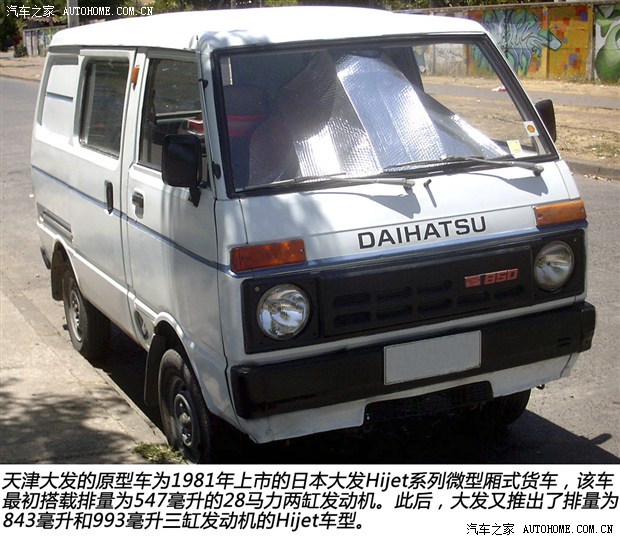
  When it comes to another main model in the "noodle" market, I believe many people still remember the name of Tianjin Dafa. "Make a fortune, buy a fortune, make a fortune!" Not many people remember this advertisement that was once broadcast on CCTV, but we can clearly feel the position of Tianjin Dafa in people’s minds at that time. The prototype of Tianjin Daihatsu is a minivan named Hijet.

Home of the car

  In March 1981, Hijet(S65) was officially launched in Japan. At first, Hijet was equipped with a two-cylinder engine with a displacement of 547 ml, with a maximum power of 28 HP (21kW)/5500rpm and a maximum torque of 41 N m/3500 rpm. Later, it introduced a two-cylinder engine with a displacement of 547 ml and a three-cylinder engine with a displacement of 843 ml and 993 ml. Hijet’s body size is 3195mm long, 1395mm wide, 1660mm high and 1820mm high.

Home of the car

  Although technically speaking, Dafa Hijet was not advanced at that time, its biggest selling point was its low price and good practicability, which just met the demand of China taxi market and national cars at that time. In 1983, the leading group of Tianjin mini-car construction was formally established and went to Japan for investigation, and finally the Hijet 850 mini-van and Charade sedan produced by Daihatsu Motor Company of Japan were selected.

Home of the car

  In 1984, Tianjin Automobile Factory introduced Daihatsu’s assembly line from Japan and began to produce Daihatsu Hijet minivan. The model made in China is named Tianjin Dafa (Huali) TJ110, which is equipped with a three-cylinder engine with a displacement of 843 ml, the maximum power is 29kW/5500rpm, the maximum torque is 59 N m/3200 rpm, and it is equipped with a 4-speed manual transmission, with a vehicle mass of 760kg. The original Tianjin Dafa was produced in CKD mode. In 1987, the first Tianjin Dafa taxi appeared on the streets of Tianjin. A few years later, in Tianjin alone, there were 50,000 "Huang Dafa" cars hanging on the top lights of taxis and driving in the streets.


Liuzhou wuling LZW6330 (prototype-minicab)

Home of the car

  At that time, the domestic "face" taxi army was also mixed with some niche models, and everyone may have no impression of Wuling’s "face". In the early 1980s, Liuzhou Tractor Factory (the predecessor of Liuzhou Minicar Factory) imported a Mitsubishi Minicab(L100) mini-car from Japan. After the vehicle was disassembled, workers manually measured and plotted the parts one by one. In January 1982, the LZ110 prototype car made by workers was successfully born, and it was named "Wanjia" brand at that time. In 1985, Liuzhou Tractor Factory was officially renamed as Liuzhou Mini-car Factory and Mitsubishi technology was officially introduced. liuzhou wuling LZW6330 was born under this background.


Minivans in Jilin and Songhua River

Home of the car

Home of the car

  At that time, almost all minivans that can be called by name in China were used as taxis, and Jilin brand minivans and Songhua River minivans were also active models. Different from other models imported from foreign mature brands in the same period, Jilin brand minibus is produced by imitating domestic minibus and improving it. Compared with other minibuses at that time, the Songhua River minibus launched by the car has more spacious interior space because of its longer wheelbase and larger vehicle size.

Home of the car

  "Face-to-face" brings great convenience to people’s travel, but serious exhaust pollution also makes "face-to-face" slowly come to an end. In 1998, as an emergency measure to control air pollution in Beijing, the Beijing Municipal Government launched a large-scale "anti-vice" campaign. In 1999, 22,000 "Faces" were completely eliminated, replacing "Faces" as the official upper position of taxis.

"The Band of Seven" was announced and announced. 7.29 Seven directors gathered for the first time.


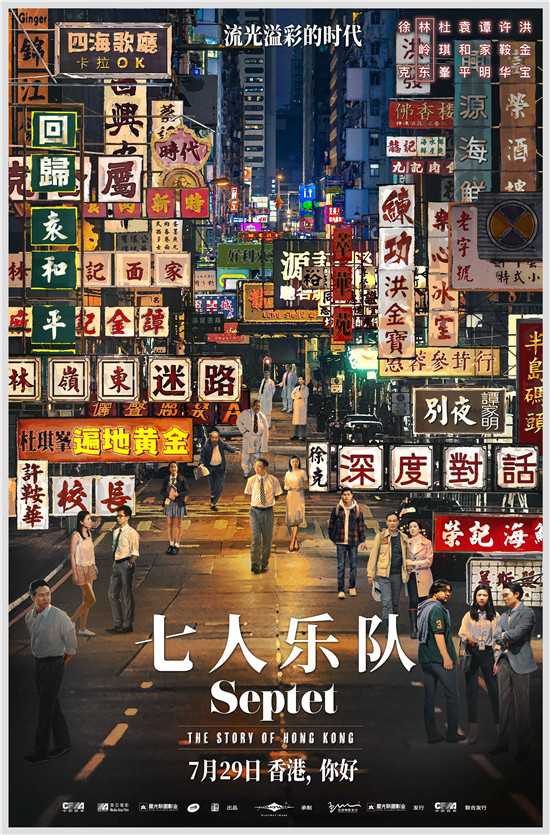
1905 movie network news Recently, the film directed by seven directors, namely,,, Du Qifeng, and, was announced to be released in the mainland on July 29th. In the preview of the simultaneous exposure, the classic works of the masters flashed one by one, concentrating the golden age of Hong Kong movies in the light and shadow. The "last romance" poster uses rich colors to restore the colorful times and reveal a strong sense of retro.


The film Band of Seven assembled the all-star lineup of Hong Kong, China filmmakers and won many awards at home and abroad. The film was selected as the official screening unit of the 73rd Cannes International Film Festival. Held its premiere at the 21st Tokyo FILMeX International Film Festival and won the audience award; It was selected as the opening film at the 25th Busan International Film Festival and 45th Hong Kong International Film Festival.


Masters have joined hands in an unprecedented 70-year history of Hong Kong.


"Historically, Hong Kong has never tried so many directors to create together." Under the historical coordinates of the 25th anniversary of Hong Kong’s return to China, the film "Band of Seven" was a precedent, and for the first time, it brought together seven palace-level directors to jointly direct. The preview of the fixed file condenses the history, and reviews the past footprints of seven directors in the way of retro film. As the video slogan says, "A movie ticket, seven masterpieces", this joint work that goes down in history, is a gift for every fan.


This time, Band of Seven records history with light and shadow, and the story spans from the 1950s to the present and the future, creating a 70-year panoramic view of Hong Kong, including Sammo Hung’s Kung Fu, Xu Anhua’s Principal, Tan Jiaming’s Farewell Night, Yuan Heping’s Return, Du Qifeng’s arachis duranensis, Lin Lingdong’s Lost and Tsui Hark’s Depth.

Starting from their own perspectives, the seven directors have jointly built a magnificent Hong Kong film atmosphere, making solos of different eras converge into a symphony of Hong Kong’s 70 years. 


Pay tribute to the golden age of Hong Kong film. Retro colors pass through the classics 


Around the 1980s, the new wave movement of Hong Kong movies was surging, and a group of film masters emerged, which led to the golden age of Hong Kong film, with influence all over Asia and radiating all over the world.

In the view of director and producer Du Qifeng, film was the main tool for making movies at that time, which embodies the creative ingenuity of Hong Kong filmmakers and carries many special meanings. This time, outstanding directors gathered together to pay tribute to the classic images made by film and commemorate the era when Hong Kong films took off and leaped forward.


It is worth mentioning that the "last romance" poster pays tribute to the golden age of Hong Kong films, and deliberately uses rich retro colors to create a street full of fireworks. The neon signs in the picture reveal a lot of film information, which is quite interesting in "treasure hunting".

From the film project to the final file, "Band of Seven" carries thousands of people’s fond memories of Hong Kong culture. Five years will not wait, and the film will land in the cinema on July 29, which is worth going to the cinema to enjoy.