What is the United States fighting for with a history of 240 years and more than 200 wars?

  From Vietnam to North Korea

  From Afghanistan to Syria

  The United States often hits

  "Humanitarian intervention"

  "Combating terrorism"

  Wait for the banner to use force against foreign countries

  For more than two centuries

  War and force

  The DNA that has been integrated into this country

  Historically speaking,

  The United States is the most combative country in the world.

  Since the declaration of independence in 1776, in the history of more than 240 years, the United States has launched and participated in more than 200 wars, and has not participated in wars for less than 20 years.

  For hundreds of years, in order to plunder land and resources, the United States has violently expelled and killed aborigines. From the end of the 15th century to the beginning of the 20th century, the population of Native Americans dropped sharply from 5 million to 250,000. The history of American development is the history of aboriginal blood and tears.

  More than 170 years ago, the United States forced Mexico to sign an unequal treaty through the US-Mexico War and other means, and plundered large areas of territory that originally belonged to Mexico, including Texas, California and Arizona.

  After the end of World War II, the United States intervened in or launched many wars overseas, which claimed a lot of lives, especially caused extremely serious civilian casualties and brought eye-catching humanitarian disasters. According to incomplete statistics, from the end of World War II in 1945 to 2001, there were 248 armed conflicts in 153 regions of the world, of which 201 were initiated by the United States, accounting for about 81%. From the Korean War to the Vietnam War, millions of civilians were killed in the war. However, the United States used "Agent Orange" on a large scale in the Vietnam War, and used depleted uranium bombs on a large scale in the Gulf War and the bombing of Yugoslavia in 1999, causing local people to suffer from cancer or other diseases.

  After 2001, under the banner of "anti-terrorism", the United States continued to fight militarily and launched wars and military operations in 85 countries around the world. The war claimed more than 900,000 lives, including 387,000 civilians. Tens of millions of refugees have been displaced in Afghanistan, Iraq, Libya, Syria and other places most devastated by war.

  The reasons why the United States launched these wars are high-sounding, often under the banner of so-called humanitarian intervention and combating terrorism. But in fact, what are the reasons behind the frequent use of force by the United States?

  Plunder oil under the guise of human rights and democracy

  US Vice President Harris:You know, in the past many years, generations have been fighting for oil.

  Harris let slip that the so-called human rights and democracy are just a cover for waging war, and the real purpose is to rob oil and control other countries by controlling global oil resources. Syria, Iraq, Libya and other countries are victims of American oil ambitions.

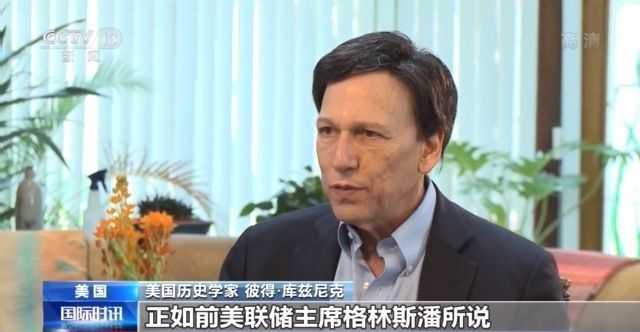
  American historian Peter Kuznik:As former Federal Reserve Chairman Alan Greenspan said, unfortunately, Americans are unwilling to admit that we invaded Iraq for oil.

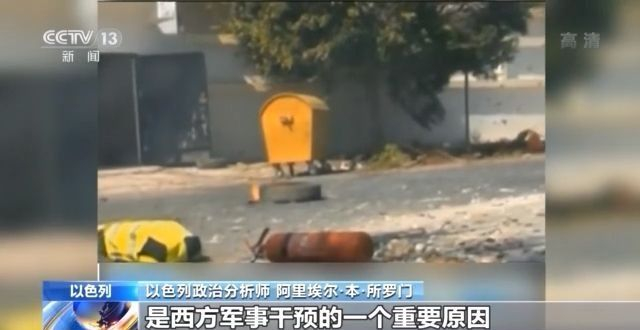
  Israeli political analyst Ariel Ben Solomon:The fact is that Libya has relatively large oil reserves, which is an important reason for western military intervention.

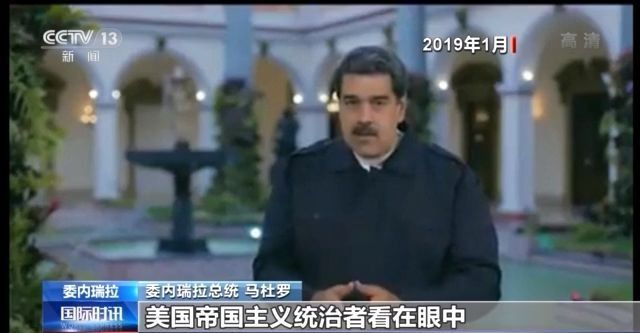
  Venezuelan President Maduro:Our country has the richest oil reserves in the world, and American imperialist rulers are looking at it and trying to get their hands on our oil, just as they did in Iraq and Libya.

  Syrian President Bashar al-Assad:The United States harms the interests of other people, undermines international law, destroys the foundation of humanity, and so on, all for the sake of oil.

  The military-industrial complex issued a "war windfall"

  American military enterprises are closely related to the US government and Congress, forming a powerful military industry interest group. According to the survey report released by the Institute of Security Policy Reform, an independent think tank in the United States, from October 2001 to August 2021,Lockheed — Martin, Raytheon, General Dynamics, Boeing and northrop — Grumman Corp.The five American military giants received a total of $2.02 trillion from Congress. These arms dealers have also spent huge sums of money lobbying Washington politicians. As a result, not only have the US military spending been rising year after year, but they have also taken advantage of the intensification of various foreign policies and regional situations to promote arms around the world.

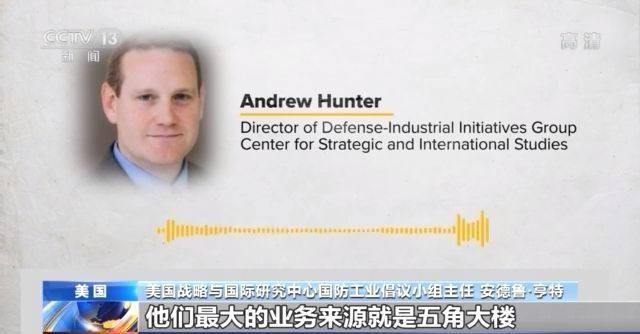
  Andrew Hunter, Director of the Defense Industry Initiative Group of the Center for Strategic and International Studies in the United States:For most defense industries, their biggest source of business is the Pentagon, so their fate follows the defense budget.

  Control other countries and safeguard global hegemony

  These interests, such as oil and arms, are only superficial reasons. What the United States has shown behind its years of belligerence is actually a hegemonic mentality of "giving priority to the United States and taking all the strong" and a unilateral thinking of "being the only one who cares about the world". Kurt Ritter, a former US Marine Corps intelligence officer, published an article on the website of Russian TV today on the 11th, saying, "The United States is trying to reshape the world according to its own ideas. The United States feels that it is the most important country, and other countries should act in the direction guided by the United States, otherwise it will be the enemy of the United States. "

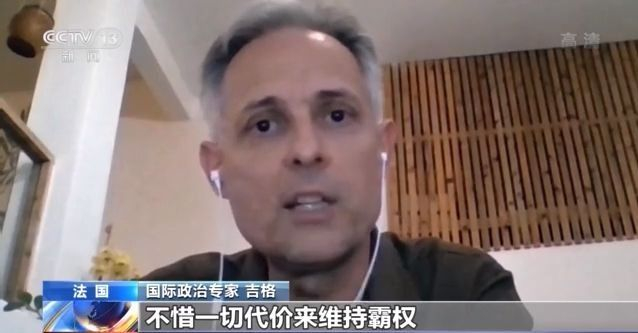
  International political expert Giger:Since 1945, the foreign policy of the United States has always been to maintain hegemony at all costs in areas they consider strategic.

  Iranian political analyst Huszcza Shm:This is the embodiment of (American) hegemony. The United States doesn’t care about other countries at all, and it doesn’t care about the United Nations. It thinks it is superior to other countries, so it dares to bully, invade and plunder the people of other countries. The attitude and behavior of the United States in the past 20 years can explain the fact that the United States simply doesn’t care about the values it preaches, such as democracy, the rule of law, and counter-terrorism. The United States only uses these as tools.

Civilization exchange and mutual learning and the construction of a community of human destiny

  On May 15, 2019, the Supreme Leader of president, China delivered a keynote speech at the opening ceremony of the Asian Civilization Dialogue Conference with the theme of "Asian Civilization Exchange and Mutual Learning and Community of Destiny", emphasizing that "civilizations exchange because of diversity, learn from each other because of exchange, and develop because of mutual learning", and put forward "China" on how to strengthen exchanges and mutual learning between different countries, different nationalities and different cultures in the world and consolidate the humanistic foundation of building a community of Asian destiny and a community of human destiny.

  The initiative of building a community of human destiny was first put forward by the Chairman of the Supreme Leader in 2013, and the report of the 19th National Congress of the Communist Party of China took "promoting the building of a community of human destiny" as one of China’s major diplomatic thoughts in the new era. Insisting on promoting the building of a community of human destiny is an important part of the Supreme Leader’s Socialism with Chinese characteristics Thought in the new era. The idea of "the community of human destiny" emphasizes that there is only one earth for mankind, and all countries coexist in one world. All countries take into account the legitimate concerns of other countries when pursuing their own interests, and promote the common development of all countries in their own development. The global value of the community of human destiny includes interdependent views of international power, common interests, global governance and sustainable development. This thought embodies China’s lofty goal of making greater contributions to world peace and development, and embodies China’s global vision, world mind and great country responsibility of unifying its own development with world development.

  Why should we strengthen exchanges and mutual learning among civilizations? What is the relationship between the exchange and mutual learning of civilizations and the building of a community of human destiny? This paper analyzes and discusses these problems.

  Why should we strengthen exchanges and mutual learning among civilizations?

  Civilization or cultural diversity is the reality of human history and the contemporary world. On November 17, 2018, the Chairman of the Supreme Leader delivered a keynote speech at the APEC CEO Summit, stressing: "We live together on the same planet. This planet has more than 200 countries and regions, more than 2,500 nationalities and more than 7 billion people. It is impossible to be uniform. This difference should not be an obstacle to communication, let alone a reason for confrontation. The diversity, exchange and mutual learning of different civilizations, systems and roads can provide a powerful impetus for the progress of human society. "

  Since the formation of human society, civilization or culture has shown a trend of diversified development. The formation and development of civilization or culture is closely related to its ecological environment. The ecological environment varies from place to place, and so does the culture. The paintings, sculptures, clay sculptures, pottery and houses all over the world from the late Paleolithic to the Neolithic discovered by archaeological excavations have different characteristics and styles, which shows that the diversity of human culture existed in the Stone Age. Throughout ancient and modern times, every nation has formed a distinctive culture because of its unique ecological environment and historical origin. Until the 21st century, the cultures of all nationalities in the world are still varied and colorful. Different ecological environments form different civilization systems; And different civilization systems have nurtured and created different nationalities with different personalities and values.

  The diversity of civilization or culture is not only the heritage of human society, but also an undeniable fact. On November 2, 2001, the first article of the Universal Declaration on Cultural Diversity adopted by the thirty-first session of UNESCO pointed out that "cultural diversity" is "the common heritage of mankind". "Culture has different forms of expression in different times and different places. The concrete manifestation of this diversity is the uniqueness and diversity of the characteristics of various groups and societies that constitute human beings. " As far as the world’s major civilizations are concerned, many types have been formed very early. In the second half of 19th century, Russian historian and cultural philosopher N. Danilevsky (1822-1885) divided the world civilization into 10 categories: (1) Egypt; (2) Syria, Babylon, Phoenicia, Kardan or ancient Semitic; (3) China; (4) India; (5) Iran; (6) Hebrew; (7) Greece; (8) Rome; (9) Neosemitic or Arabic; (10) Germanic, Roman or Europa. Only two of them, Mexico and Peru, died out at an early stage. Bingler (1880-1936), a German historian, divided the world civilization into eight types: Egypt, Babylon, India, China, Greece-Rome, Arabia, the West and Mexico, in addition to the Russian civilization that has not yet been fully formed.Arnold Joseph Toynbee (1889-1975), a British historian, divided the civilizations in world history into 21 categories: among them, the first generation of civilizations directly produced from primitive society were: Egypt, Sumer, Minos, ancient China, Andes and Maya; The kinship civilizations derived from the first generation civilization are Hittite, Babylon, ancient India, Greece, Iran, Syria, Arabia, China, India, Korea, the West and Byzantium. In addition, there are five civilizations that died halfway: Polynesia, Eskimo, Nomad, Sparta and Ottoman. American political scientist Samuel P. Huntington (1927-2008) divided contemporary world civilizations into eight categories, namely, Western civilization, Chinese civilization (originally called Confucian civilization), Islamic civilization, Russian civilization, Japanese civilization, Indian civilization, Latin American civilization and African civilization.

  Civilization or culture has relativity and blending. There is no distinction between advanced and backward civilization or culture. First, every country or nation has its own unique cultural traditions and values, which are incomparable with those of other countries or nations. Such as religious beliefs, values, ethics and customs, cannot be compared and measured. Second, the value of all civilizations or cultures is relative, there is no absolute value standard, and there is no difference between "backwardness" and "progress" in value of all civilizations or cultures. For example, the music, dance and drama of all ethnic groups have their own advantages and disadvantages. For another example, Westerners eat with knives and forks, while Chinese eats with chopsticks. There is no difference between high and low. Westerners usually wear white dresses at weddings, while Chinese usually wears red dresses, and there is no distinction between advanced and backward. Third, the value of every civilization or culture should be judged by the value system of the nation, and western values should not be imposed on others.

  Cultural exchange is one of the important driving forces of cultural development, and it is also an important factor for the cultural richness and prosperity of all ethnic groups. Because culture is mixed and cumulative, all kinds of cultures that have been passed down in the world have been formed through long-term accumulation. Krober, an American anthropologist, said, "… … Broadly speaking, the process of cultural development is incremental, so it is also cumulative, while the process of biological evolution is basically a process of substitution. " According to the opinion of American anthropologist Ogburn (W.F.), "the reasons for cultural accumulation are due to two properties, one is the preservation of old culture, the other is the increase of new culture … … There is a certain relationship between the existing culture and the emergence of new culture … … The so-called accumulation of culture means that the new culture is incorporated into the number of existing cultures. " The accumulation of culture is a basic form of cultural growth and development. Any culture is accumulating all the time, either because of invention or because of introduction. Both invention and introduction are mostly caused on the basis of cultural exchange.

  In primitive times, due to inconvenient transportation, there was little communication between different nationalities, and the development of national cultures mainly depended on their own internal changes and innovations. With the continuous development of transportation, the communication between different ethnic groups is becoming more and more frequent, and there are more and more contacts between different cultures and civilizations. All ethnic groups are constantly absorbing their own cultures from other ethnic groups. Especially since the industrial revolution, with the emergence of modern means of transportation such as automobiles, trains, ships and airplanes, various obstacles between countries and regions have been broken, and economic and cultural exchanges have become more and more frequent. All countries and ethnic groups have everything they have, but they have nothing to lose. It can be said that everything from a flower to a bean to economic, political and academic thoughts can not be separated from the general trend of free choice and free circulation.

  As early as 1936, R Linton, a famous American anthropologist, gave an example in the book "A Study of Man", stating that modern American culture was mostly taken from other nationalities, and the main daily necessities of modern Americans were not invented and created by Americans themselves. He said, "American bathroom equipment is a mixture of European and American cultures, soap was invented by ancient Gauls, pajamas originated in India, soft slippers were invented by Indians, overshoes were made of rubber discovered by Central American Indians, coats came from Asian grassland nations, ties came from Croats, felt-topped hats came from Asian grassland regions, umbrellas came from Southeast Asia, glass came from Egyptians, tobacco came from Brazil and cigars came from Spain", and so on.

  Protecting civilization or cultural diversity is the consensus of all countries in the world. On November 2, 2001, UNESCO adopted the Universal Declaration on Cultural Diversity at its 31st session in Paris. The declaration is divided into five parts and 12 articles, which confirms that cultural diversity is a basic characteristic of human beings and provides a guarantee for countries to protect their own civilization or culture. On October 17th, 2003, UNESCO adopted the Convention for the Protection of Intangible Cultural Heritage at the 32nd General Conference, which put forward clear principles and regulations for the protection of intangible cultural heritage in all countries of the world. On October 20, 2005, the thirty-third session of the United Nations Educational, Scientific and Cultural Organization adopted the Convention on the Protection and Promotion of the Diversity of Cultural Expressions, pointing out that cultural diversity has created a colorful world, encouraged dialogue among different cultures and promoted mutual respect and peaceful coexistence among different cultures. Generally speaking, protecting all kinds of civilizations and cultures in the world is the consensus of all countries in the world and the universal requirement of all ethnic groups.

  Respecting and protecting the diversity of civilization or culture is the premise of ensuring world peace and security. Like biodiversity, the diversity of civilization leads to fragility and diversity leads to stability. Uniqueness leads to extremes, and diversity leads to inclusiveness. If only one civilization dominates the world, there can be no democracy and freedom in the world, let alone a peaceful and safe world.

  Diversity and difference of civilizations are the basis of mutual exchange and learning among civilizations. On June 10, 2018, the Chairman of the Supreme Leader delivered a speech at the Qingdao Summit of the SCO, pointing out: "Although arguments such as clash of civilizations and superiority of civilizations have emerged from time to time, the diversity of civilizations is an inexhaustible motive force for human progress, and exchanges and mutual learning among different civilizations are the common aspiration of people of all countries." On November 17, 2018, General Secretary of the Supreme Leader once again stressed in his keynote speech at the APEC CEO Summit that "differences should not be an obstacle to communication", let alone a reason for confrontation.

  The diversity and difference of civilizations are the premise of exchanges and mutual learning among civilizations, not the root of conflicts. Any civilization is not self-enclosed in the long history of development, but maintains its own characteristics in mutual communication, learns from each other’s strong points in competition and comparison, and develops together in seeking common ground while reserving differences. If the two civilizations are exactly the same or similar, it is impossible to exchange and learn from each other, and it is impossible to learn from each other. All kinds of civilizations in the world are a mixture of various civilizations, some of which are inherent, and quite a few or even most of them are foreign.

  Portland Russell, a famous British philosopher and thinker, attached great importance to the contact and complementarity of civilizations. In his book The Question of China published in 1922, he said: "The contact between different civilizations used to be a milestone in human progress. Greece learns from Egypt, Rome learns from Greece, Arabia learns from Rome, medieval Europe learns from Arabia, and Renaissance Europe learns from the Eastern Roman Empire. There are many precedents in which students are superior to teachers. As for China, if we regard him as a student, it may be another example. In fact, we have as much to learn from them as they have to learn from us, but we have far fewer learning opportunities. " It can be seen that as early as more than 90 years ago, Russell realized that every civilization has its own length, and the exchange and reference between different civilizations is an important factor to promote the development of human civilization.

  What role does civilization exchange and mutual learning play in building a community of human destiny?

  The exchange of civilizations and mutual learning provide a humanistic basis for the building of a community of human destiny. To build a community of human destiny, we must have a good humanistic foundation. On May 15, 2019, the Chairman of the Supreme Leader emphasized in his keynote speech at the opening ceremony of the Asian Civilization Dialogue Conference: We should "consolidate the humanistic foundation for building a community of Asian destiny and a community of human destiny." The so-called humanism is a cultural phenomenon created by people in their long-term survival practice and adapted to the local ecological environment. The article "Humanity" in Ci Hai states that "Humanity refers to various cultural phenomena in human society". Due to the different ecological environment and historical sources, different civilizations have different values, outlook on life, morality, food, clothing, housing and transportation, customs, literature and art, etc. There are also great differences in national character, way of thinking and cognitive style; Countries all over the world are working together to build a community of human destiny. Different civilizations must strengthen exchanges and mutual learning, so that they can understand each other, identify with each other, learn from each other and respect each other. Respect your own civilization and the civilization of others; Respect both strong and weak civilizations. As the Chairman of the Supreme Leader pointed out: "‘ Everything breeds without harming each other, and Tao runs parallel without contradicting each other. ’ We must respect the diversity of civilizations, promote exchanges and dialogues, peaceful coexistence and harmonious symbiosis among different civilizations, and we must not be exclusive and belittle other civilizations and nations. "

  Therefore, "there should be dialogue between civilizations, not exclusion; Communicate, don’t replace. " Through exchanges and mutual learning, we can understand the reasons for the differences among civilizations, the strengths and weaknesses of other civilizations, and the strengths and weaknesses of our own civilization. Through exchanges and mutual learning, we can understand the national character, way of thinking and cognitive style of different civilized countries. Through exchanges and mutual learning, it is possible to realize that all civilizations are cultural systems created by human beings to adapt to the ecological environment, knowledge and experience created and accumulated by all ethnic groups in long-term production practice, and valuable heritage of all mankind; Only through exchanges and mutual learning can we realize the relativity of civilizations. There is no distinction between high and low civilizations, which has important historical value and practical significance. Through exchanges and mutual learning, it is possible to realize that "human beings only have different colors and languages, and civilizations only have different colors and colors", and it is possible to truly "respect each other and treat each other as equals" and to "promote exchanges, dialogues and harmonious coexistence among different civilizations". Through exchanges and mutual learning, it is possible to avoid conflicts and wars caused by misunderstandings between different civilizations, and it is possible to make some people realize that they think that "their own race and civilization are superior, and it is stupid in understanding and disastrous in practice to persist in transforming or even replacing other civilizations";It is possible to maintain world peace and development and build a community of human destiny. Therefore, "exchange and mutual learning is the essential requirement of the development of civilization" and "deepening humanities exchange and mutual learning is an important way to eliminate barriers and misunderstandings and promote mutual understanding and communication between the people".

  The exchange of civilizations and mutual learning provide development impetus for the building of a community of human destiny. In the long history of development, any civilization is not self-enclosed, but learns from each other in competition and comparison, protects its own characteristics in mutual communication, and develops together in seeking common ground while reserving differences. Every civilization has its strengths and weaknesses. If the two civilizations are exactly the same or similar, it is impossible to learn from each other’s strengths and absorb new cultural factors, and civilizations will have no vitality. Any civilization will decline if it is "self-enclosed for a long time". Exchange and mutual learning are the essential requirements of the development of civilization. Only by communicating with other civilizations to learn from each other and learn from each other’s strengths can we maintain vigorous vitality. " Without vitality, a civilization will stagnate and decline. The demise of many civilizations in history is mostly caused by the loss of vitality.

  First of all, the exchange of civilizations and mutual learning is the basis for the complementarity of human civilizations. The diversity of civilizations is the basic feature of human society, the premise of exchange and mutual learning of civilizations, and the basis of complementary civilizations. The more heterosexual and heterogeneous the civilization, the stronger the complementarity, and the more likely it is to absorb valuable things from each other. China philosophers realized the importance of cultural diversity and difference more than two thousand years ago, and thought that "difference" was the foundation of things’ complementarity and development, and only when different things complemented each other could they develop and prosper continuously. If things are the same, there will be no comparison and reference, and things will stagnate or even wither and die. Guoyu Zhengyu records what Shi Bo said at the end of the Western Zhou Dynasty: "Harmony with real creatures, the same will not continue", that is, things of the opposite sex and different natures coexist, and things of the same sex and the same nature are mutually exclusive, that is, things with different natures can be aggregated to produce new things; When things of the same nature are added repeatedly, they are still the original things, and it is impossible to produce new things, so they will stagnate or wither. "Like-sex repulsion, opposite-sex attraction" is the basic law of natural phenomena, as well as social and cultural phenomena. Heterosexual and heterogeneous things are complementary, while like-sex and homogeneous things are not complementary and mutually exclusive. Therefore, various cultures can communicate with each other, learn from each other and learn from each other.

  Secondly, the exchange of civilizations and mutual learning is the premise of human civilization innovation. Diversity of civilization is the source of innovation and creation. It is manifested in three aspects: first, cultural innovation or the creation of a new culture, in many cases, is produced in the exchange of different civilizations, and many of them are created on the basis of foreign cultures or by absorbing their essence. Many famous dances, music, paintings, crafts, etc. at all times and all over the world are produced in the exchange of different cultures. Many dances and music popular in the modern west are created on the dances and music of African blacks and Indians. Second, many national literary and artistic creations are based on the national cultural traditions. Without the national cultural tradition, the works created will not have distinctive national characteristics. Article 1 of UNESCO’s Universal Declaration on Cultural Diversity points out: "Cultural diversity is the source of communication, innovation and creation, which is as essential to human beings as biodiversity is to maintain biological balance." Third, most areas where culture is prosperous and developed are areas where cultural diversity coexists. One of the important reasons for the backwardness in some areas is that there are too few cultural exchanges and too single culture, and there are no conditions to absorb the essence of each other and learn from each other’s strengths. Historically, the more single a country or region’s culture is, the more conservative and exclusive it is, and the slower its social and cultural development is. In open and multicultural areas, social, economic and cultural development is also rapid. Therefore, any civilization must "To keep pace with the times and innovate and develop, we must "keep pace with the times and constantly absorb the essence of the times", otherwise there will be no vitality. We "should use innovation to increase the momentum of civilization development, activate the source of civilization progress, and constantly create civilized achievements that span time and space and are full of eternal charm."

  Finally, the exchange of civilizations and mutual learning is an important measure to achieve sustainable development. Civilization or cultural heritage is a renewable resource with important value for a nation or country, and it is also an important resource for sustainable development, which can benefit future generations. Civilizations and cultural heritages of various countries have historical, artistic and scientific values, as well as research, appreciation and education values, as well as direct and indirect economic values. Every nation has its own unique lifestyle, customs, clothing, food, shelter and transportation, life rituals, music and dance, sculpture and painting, etc., which constitute a unique human landscape. Most developed and developing countries attach great importance to the protection, development and utilization of human resources. Because tourism driven by cultural heritage resources occupies a fairly high proportion in the economy of the whole country, the income of tourism and related industries in some countries is even the main financial income of the country. Tourists’ sightseeing in foreign countries is one of the forms of civilization exchange and mutual learning. Developing natural and human resources and tourism can not only make tourists appreciate the beauty of scenery and the beauty of landscapes in different countries and regions, but also appreciate the unique cultural customs of different countries and nationalities, enhance tourists’ understanding, recognition and respect of different civilizations, and also play a role in learning from each other. In this way, it is not only conducive to the sustainable economic development of the host country, but also conducive to exchanges and mutual learning between different civilizations, and more conducive to the building of a community of human destiny.

  The diversity and difference of civilization are not the root of conflict, but the basis of complementarity and the premise of innovation and development.

  To sum up, the reasons for strengthening exchanges and mutual learning among different civilizations include: First, the diversity of civilizations is the reality of human history and the contemporary world; Second, civilization has the characteristics of relativity and blending; Third, protecting civilization or cultural diversity is the consensus of all countries in the world; Fourth, the diversity and differences of civilizations are the basis for exchanges and mutual learning among civilizations. Civilized exchanges and mutual learning play a very important role in the construction of a community of human destiny. First, civilized exchanges and mutual learning provide a humanistic foundation for the construction of a community of human destiny. Secondly, the exchange of civilizations and mutual learning provide a driving force for the building of a community of human destiny. Therefore, the diversity and difference of civilizations are not the root of conflict, but the basis of complementarity and the premise of innovation and development.

  Judging from a large number of historical and contemporary facts, the more frequent and in-depth exchanges and mutual learning between different civilized countries, the more they agree and respect each other, the better the relations between countries, and the stronger the foundation for building a community of human destiny; The rarer and shallower exchanges and mutual learning are, the easier it is to misunderstand each other, and the easier it is to produce contradictions and conflicts. The relationship between countries will be in a state of tension, and there will be no basis for building a community of human destiny.

  Chinese and western civilizations belong to two different types of civilizations, each with its own strengths and weaknesses. As early as the beginning of last century, Russell believed that both China and the West should keep their own strengths and learn from each other’s strengths, and never learn from each other’s weaknesses and keep their own weaknesses. He believes that the exchanges between China and the West can complement each other. He said: "The remarkable advantage of our civilization lies in the scientific method; The strength of China civilization lies in its reasonable understanding of the destination of life. People must want to see the two gradually combined. " "Exchanges between China and the West are good for both sides. They can learn essential practical efficiency from us; And we can learn some thoughtful wisdom from them. This wisdom has made China survive when other ancient countries have perished. " Russell even thought that China’s wisdom saved the western civilization and the world. He emphasized that "from the perspective of the overall interests of mankind, the arrogant self-confidence of Europeans and Americans will have a greater negative effect than that of Chinese’s slowness … … The way of life explored by Chinese has been followed for thousands of years. If it can be adopted by the whole world; There will definitely be more happiness and peace on earth than now. However, the European outlook on life advocates competition, development, never being calm, never being satisfied and destruction. The efficiency that leads to destruction can only bring destruction in the end, and our civilization is moving towards this end. If we don’t learn from the wisdom of the East, which has always been despised by us, our civilization will have no hope. "In the new era, Luo Su’s feeling that the essence of China culture can bring hope to human peace is becoming a reality.

  Liang Qichao also emphasized the importance of exchanges and mutual learning between different civilizations. He believed that we must "use western civilization to expand my civilization, and use my civilization to subsidize western civilization, so that it can be combined into a new civilization." And said: "We account for a quarter of the world’s population, and we should be responsible for a quarter of the happiness of all mankind. If you don’t fulfill this responsibility, you are sorry for your ancestors, sorry for the human beings at the same time, but actually sorry for yourself. " The Chairman of the Supreme Leader stressed at the Asian Civilization Dialogue Conference: "We should not only make our own civilization full of vitality, but also create conditions for the development of other countries’ civilizations and make the world’s civilized gardens flourish."

  In a word, the exchange and mutual learning of civilizations and the community of human destiny are two important ideas in the Supreme Leader’s Socialism with Chinese characteristics Thought in the new era, which will play an increasingly important role in maintaining world peace and security and building a new international order.

These situations will be judged as major accidents! Standard for judging hidden dangers of major accidents in metallic and nonmetallic mines issued

  CCTV News:Recently, the State Administration of Mine Safety issued the Criteria for Determining the Hidden Dangers of Major Accidents in Metal and Non-metallic Mines, which came into effect on September 1, 2022, and the Criteria for Determining the Hidden Dangers of Major Production Safety Accidents in Metal and Non-metallic Mines (Trial) issued by the former State Administration of Work Safety was abolished at the same time.

  The Standard defines the criteria for judging the hidden dangers of major accidents in metallic and nonmetallic underground mines, including the use of equipment, materials or processes that are explicitly prohibited by the state; Adjacent mine shafts and lanes with different mining rights are connected with each other, or the shafts and lanes of adjacent independent production systems with the same mining rights are connected without authorization; When the surface water or atmospheric precipitation in the mining area and its vicinity endangers the underground safety, water prevention measures are not taken according to the design; The wellhead elevation has not reached the local historical highest flood level of more than 1m, and corresponding protective measures have not been taken according to the design; The mine threatened by surface water backflow did not stop production and evacuate people during the period of heavy rainfall or flood in the upper reaches of its incoming water; Failing to complete or carry portable gas detection alarm and self-rescuer with mine product safety signs, or employees can’t use self-rescuer correctly.

  The Standard defines the criteria for judging the hidden dangers of major accidents in metal and nonmetal open-pit mines, including the mined-out areas and caves that have not been proved before underground mining is converted to open-pit mining, or the mined-out areas and caves that threaten the safety of open-pit mining are not treated according to the design; Using equipment, materials or processes that are explicitly prohibited by the state; Top-down mining sequence is not adopted to mine in steps or layers; The working slope angle is greater than the design working slope angle, or the final slope step height exceeds the design height.

  The Standard also clarifies the criteria for judging the hidden dangers of major accidents in tailings ponds, including the existence of activities such as mining, excavation and blasting that endanger the safety of tailings ponds in the reservoir area or tailings dams; The average slope ratio of the dam body or the slope ratio of the accumulation dam is steeper than the design slope ratio; The dam height exceeds the design total dam height, or the tailings pond exceeds the design storage capacity to store tailings, etc.

  The following is the full text of the Criteria for Determining the Hidden Dangers of Major Accidents in Metal and Non-metal Mines.

  ↓ ↓ ↓

  The State Administration of Mine Safety issued

  Notice of "Criterion for Judging the Hidden Dangers of Major Accidents in Metal and Non-metal Mines"

  Kuang ‘an [2022] No.88

  The emergency management departments (bureaus) of all provinces, autonomous regions and municipalities directly under the Central Government, the emergency management bureau of Xinjiang Production and Construction Corps, the provincial bureaus of the State Administration of Mine Safety, and relevant central enterprises:

  The Criteria for Judging the Potential Dangers of Major Accidents in Metal and Non-metal Mines has been considered and adopted at the 14th executive meeting of the State Administration of Mine Safety in 2022, and is hereby printed and distributed to you, please follow them.

  These Provisions shall come into force as of September 1, 2022. With the consent of the Emergency Management Department, the Criteria for Determining the Hidden Dangers of Major Production Safety Accidents in Metal and Non-metal Mines (Trial) (No.98 [2017] of the General Administration of Work Safety) issued by the former State Administration of Work Safety shall be abolished at the same time.

  National Mine Safety Supervision Bureau

  July 8, 2022

  Criteria for judging hidden dangers of major accidents in metallic and nonmetallic mines

  A major accident hidden danger of metal and nonmetal underground mines

  (1) In any of the following circumstances:

  1. There are less than 2 independent safety exits from the mine to the ground, or they are inconsistent with the design;

  2. There are only two independent safety exits directly to the ground in the mine, and the distance between the safety exits is less than 30 meters, or the length of one wing of the ore body exceeds 1000 meters and no safety exits are set on this wing;

  3. All the safety exits of the mine are vertical shafts and there is no ladder room in the shaft, or there is only one set of hoisting system and no ladder room in the cage hoisting shaft as the main safety exit;

  4. There are less than two safety exits in the middle (horizontal) main production area, single mining area, panel or ore block, or they are not connected with the safety exits leading to the ground;

  5. The emergency exit is blocked or its ladders, steps and other facilities can not be used normally, resulting in the emergency exit being blocked.

  (two) the use of equipment, materials or processes prohibited by the state.

  (three) the adjacent mine shafts and lanes of different mining rights are connected with each other, or the shafts and lanes of the adjacent independent production system of the same mining right are connected without authorization.

  (four) one of the following circumstances exists in the current drawings of underground mines:

  1. The drawings specified in Article 4.1.10 of Safety Regulations for Metal and Non-metallic Mines (GB16423 -2020) are not saved, or the above drawings are not updated every 3 months in production mines and every 1 month in infrastructure mines;

  2. The ground buildings and structures, transportation roads and valleys and rivers within the range of rock mass movement are inconsistent with the reality;

  3. The development project and the mine shaft or underground mining area of the quasi-mining project are inconsistent with the actual situation;

  4. The position relationship between adjacent mining areas is inconsistent with the actual situation;

  5. The positions, treatment methods and present situation of mined-out areas and abandoned shafts and lanes, and the positions of surface subsidence areas are inconsistent with the reality.

  (five) one of the following circumstances exists in the conversion of open pit mining to underground mining:

  1. Waterproof and drainage measures are not taken as designed;

  2. When the open-pit and underground mining are combined, the mining sequence is inconsistent with the design;

  3. Failing to take protective measures such as setting safety top pillar or rock cushion as designed.

  (six) when the surface water or atmospheric precipitation in the mining area and its vicinity endangers the underground safety, the water prevention measures are not taken according to the design.

  (seven) one of the following circumstances exists in the main underground drainage system:

  1. The number of drainage pumps is less than 3, or the rated drainage capacity of working pumps and standby pumps is lower than the design requirements;

  2. The working and standby drainage pipeline is not set according to the design in the mine, or the drainage pipeline is not effectively connected with the water pump;

  3. The exit of the main water pump house in the lowest middle section of the underground leading to the middle roadway is not equipped with a fortified water gate, or the other exit is not more than 7 meters above the ground of the water pump house;

  4. Use mined-out areas or other abandoned roadways as water silos.

  (eight) the wellhead elevation did not reach the local historical maximum flood level of more than 1 meter, and did not take corresponding protective measures according to the design.

  (nine) the hydrogeological type is medium or complex, and one of the following circumstances exists:

  1. Not equipped with professional and technical personnel for water prevention and control;

  2. No water prevention and control institution is set up, or no water exploration team is established;

  3. The special drainage equipment is not equipped, or the drainage operation is not carried out as designed.

  (ten) one of the following circumstances exists in a mine with complex hydrogeological types:

  1. The key roadway waterproof door setting does not conform to the design;

  2. The partition wall or water distribution valve between the water warehouse and the water pump house of the main drainage system is not set as designed.

  (eleven) in the water inrush threat area or suspicious area for mining operations, there is one of the following circumstances:

  1. The technical scheme for water prevention and control has not been compiled, or special technical measures for construction safety have not been formulated before construction;

  2. The drainage is not advanced, or the number and depth of advanced drilling holes are lower than the design requirements, or the orientation of advanced drilling holes does not meet the design requirements.

  (twelve) the mine threatened by surface water intrusion did not stop production and evacuate people during the period of heavy rainfall or flood in the upper reaches of its incoming water.

  (thirteen) there is a danger of spontaneous combustion in a mine, and one of the following circumstances exists:

  1. The underground environment monitoring system is not installed to realize automatic monitoring and alarm;

  2. Failing to take fire prevention and extinguishing measures according to the design or national or industrial standards;

  3. Found signs of spontaneous combustion and failed to take effective measures.

  (14) Failing to design a security mine (rock) pillar or take other measures when the moving range of adjacent mines has overlapping and other mutual influences.

  (fifteen) one of the following circumstances exists in the surface facilities, and effective safety measures are not taken according to the design:

  1. There are residential villages or important equipment and facilities within the moving range of rock mass;

  2. The entrances and exits of major development projects are easily affected by geological disasters such as surface landslides, rolling stones and mudslides.

  (sixteen) one of the following circumstances exists in the security mine (rock) pillar or stope pillar:

  1. Failing to design a mine (rock) pillar;

  2. The pillar is not mined as designed;

  3 unauthorized mining, damage to the mine (rock) column.

  (seventeen) failed to deal with the goaf according to the design requirements or time.

  (eighteen) one of the following circumstances exists in mines with complex engineering geological types and serious ground pressure activities:

  1. No specialized agencies are set up, and specialized personnel are equipped to be responsible for the prevention and control of ground pressure;

  2. No special technical measures have been formulated to prevent and control ground pressure disasters;

  3. Found signs of large-scale ground pressure activity, and failed to immediately stop operations and evacuate personnel.

  (nineteen) roadway or stope roof support measures are not taken according to the design.

  (twenty) the mine does not use mechanical ventilation, or the mine with mechanical ventilation has one of the following circumstances:

  1. Under normal production conditions, the main ventilator does not run continuously;

  2. When the main ventilator fails or stops for inspection, it fails to immediately report to the dispatching room and the main person in charge of the enterprise, or fails to take necessary safety measures;

  3. The main ventilator is not equipped with a standby motor as required, or is not equipped with equipment and tools that can quickly replace the motor;

  4. The wind speed, air volume and wind quality of the working face do not meet the requirements of national standards or industry standards;

  5. The mine without online monitoring system of ventilation system fails to test the ventilation system once a year according to national standards;

  6. The main ventilation facilities can’t achieve mine anti-wind within 10 minutes, or the anti-wind test period is more than 1 year.

  (21) failing to complete or carry portable gas detection alarm and self-rescuer with mine product safety signs, or employees cannot use self-rescuer correctly.

  (twenty-two) the lifting system responsible for lifting personnel has one of the following circumstances:

  1. The hoist, anti-falling device, steel wire rope, connecting device and lifting container are not regularly inspected according to national regulations, or the safety protection device of lifting equipment fails;

  2. The safety door or shaking table set at the wellhead of the shaft and the horsehead door in the middle section of the underground is not interlocked with the hoist;

  3. The overwinding buffer device, wedge guide and overwinding retaining beam of shaft hoisting system are not set according to the national regulations or cannot be used normally, or the cage hoisting system of hoisting personnel is not set with cage anti-falling device in the overwinding section of derrick or well tower according to the national regulations;

  4. The inclined shaft train hoisting system fails to set the normally closed anti-running device, car stopper and car barrier according to the national regulations, or the connecting chain and connecting bolt do not meet the national regulations;

  5. The locking between the inclined shaft hoisting signal system and the hoist is not realized.

  (twenty-three) one of the following circumstances exists in the underground trackless transport vehicle:

  1. Failing to obtain the safety signs of mining products in metallic and nonmetallic mines;

  2. The number of manned persons exceeds 25 or exceeds the number of nuclear carriers;

  3. The braking system adopts dry brakes, or it is not equipped with service braking system, parking braking system and emergency braking system at the same time;

  4. Failing to inspect the vehicle according to the national regulations.

  (twenty-four) the primary load does not use dual power supply, or any power supply in the dual power supply can not meet the needs of all primary loads.

  (twenty-five) the neutral point of the 6 kV ~ 35 kV system supplying power to the underground stope is directly grounded.

  (twenty-six) mines with complex engineering geology or hydrogeological types have not carried out construction organization design or failed to implement safety measures according to construction organization design.

  (twenty-seven) new construction, renovation and expansion of mine construction projects have one of the following acts:

  1. The design of safety facilities is not approved, or major changes occur after approval, and the construction is organized without approval again;

  2. Organize production before the completion acceptance, except for the approved joint commissioning.

  (twenty-eight) mining enterprises in violation of the relevant provisions of the state on project contracting, one of the following acts:

  1. Contract the project to a unit without legal qualifications and conditions, or the number of contractors exceeds the number stipulated by the state;

  2. The person in charge of the project department of the contractor, the safety production management personnel, professional and technical personnel and special operations personnel do not meet the quantity and conditions stipulated by the state or do not belong to the formal employees of the contractor.

  (twenty-nine) the underground or wellhead hot work fails to implement the examination and approval system or safety measures according to the provisions of the state.

  (30) The annual output of a mine exceeds the designed annual production capacity of the mine by 20% or more, or the monthly output exceeds the designed annual production capacity of the mine by 20% or more.

  (31) The safety monitoring system, personnel positioning system and communication system have not been established in the mine, or the established system does not conform to the relevant provisions of the state, or the system is not working normally and is not repaired in time, or the system is closed or destroyed, or the relevant data and information are tampered with, concealed or destroyed.

  (32) Not equipped with full-time mine managers, chief engineers and deputy mine managers in charge of safety, production and electromechanical, or not equipped with technicians in mining, geology, surveying, electromechanical and other professions.

  Two, metal nonmetal open-pit mines major accidents

  (1) Before underground mining is converted to open-pit mining, mined-out areas and caves have not been proved, or mined-out areas and caves that threaten the safety of open-pit mining have not been treated according to the design.

  (two) the use of equipment, materials or processes prohibited by the state.

  (three) the top-down mining sequence is not used to mine by steps or layers.

  (four) the working slope angle is greater than the design working slope angle, or the final slope step height exceeds the design height.

  (five) mining or destroying the mine (rock) pillar or hanging ore body that is required to be retained in the design.

  (6) Failure to analyze the stability of stope slopes and dump slopes according to relevant national standards or industrial standards.

  (seven) one of the following circumstances exists in the slope:

  1. The stope slope with a height of 200 meters or more has not been monitored online;

  2. The slope stability monitoring system has not been established for the dump slope with a height of 200 meters or more;

  3. Shut down or destroy the monitoring system or conceal, tamper with or destroy its relevant data and information.

  (eight) the slope slip phenomenon, there is one of the following circumstances:

  1. Transverse and longitudinal radial cracks appear on the slope;

  2. Uplift (bulge) occurs at the toe of the front edge of the slope, and the cracks at the rear edge expand rapidly;

  3. The horizontal displacement or vertical displacement shown by displacement observation data shows an accelerated change trend.

  (nine) the slope of the transportation road is more than 10% of the design slope.

  (10) Failing to build flood control and drainage facilities according to the design in open pit mines.

  (eleven) one of the following circumstances exists in the dump:

  1. Dumping soil along the slope on the foundation with an average slope greater than 1:5, and failing to take safety measures as designed;

  2. There are crowded places within 2 times of the total stacking height of the dump, and safety measures are not taken as designed;

  3. Interception and drainage facilities are not built around the hillside dump as designed.

  (twelve) open pit safety platform and cleaning platform are not set according to the design.

  (thirteen) to carry out mining operations on the dump in use without authorization.

  Three, the tailings major accidents

  (a) there are mining, excavation, blasting and other activities that endanger the safety of the tailings dam in the reservoir area or on the tailings dam.

  (2) The dam body is under any of the following circumstances:

  1. Serious piping and soil deformation occur in the dam body;

  2. The dam shows signs of penetrating cracks, collapse and sliding;

  3. There are large longitudinal cracks in the dam body, and a large range of seepage water escapes at a high level or is swamped in a large area.

  (3) The average slope ratio of the dam body or the slope ratio of the accumulation dam is steeper than the design slope ratio.

  (four) the dam height exceeds the design total dam height, or the tailings pond exceeds the design storage capacity to store tailings.

  (5) The rising rate of tailings dam is greater than the designed rising rate of accumulation.

  (6) The tailings dam with tailings dam failed to conduct a comprehensive safety review of the tailings dam according to Article 6.1.9 of the Safety Regulations for Tailings Dam (GB39496-2020).

  (7) The buried depth of the saturation line is less than that of the control saturation line.

  (8) Before the flood season, the flood control calculus of the tailings pond was not carried out according to the relevant provisions of the state, or the flood control height and dry beach length of wet tailings pond were less than the design value, or the flood control height and flood control width of dry tailings pond were less than the design value.

  (9) The flood drainage system is under any of the following circumstances:

  1. The concrete thickness, strength or type of drainage wells, drainage chutes, drainage pipes, drainage tunnels, arch slabs and cover plates do not meet the design requirements;

  2. The flood drainage facilities are partially blocked or collapsed, the drainage wells are inclined, and the drainage capacity is reduced, which cannot meet the design requirements;

  3. When the flood discharge structure is terminated, the sealing measures do not meet the design requirements.

  (ten) tailings, waste or waste water that are not designed into the library.

  (eleven) when a variety of tailings with different ore properties are mixed and discharged, they are not discharged as designed.

  (twelve) in winter, the ore drawing operation is not carried out according to the design requirements.

  (thirteen) one of the following circumstances exists in the safety monitoring system:

  1. The safety monitoring system is not set as designed;

  2. The safety monitoring system is not working properly and has not been repaired in time;

  3. Shut down or destroy the safety monitoring system, or tamper with, conceal or destroy its relevant data and information.

  (fourteen) dry tailings in any of the following circumstances:

  1. The moisture content of the tailings in storage is greater than the design value, so normal rolling cannot be carried out and reliable preventive measures are not set;

  2. The stacking propulsion direction is inconsistent with the design;

  3. The layered thickness or step height is greater than the design value;

  4. Not rolled according to the design requirements.

  (15) Experience shows that the minimum safety factor of dam anti-sliding stability is less than 0.98 times of the national standard.

  (16) The third-class and above tailings ponds and "overhead storage" have not set up emergency roads leading to the dam crest and the vicinity of the flood drainage system according to the design, or the emergency roads cannot meet the needs of passing and transporting emergency materials during emergency rescue.

  (seventeen) tailings mining in any of the following circumstances:

  1. Unauthorized mining;

  2. The mining method, sequence, single-layer mining height and step slope angle do not meet the design requirements;

  3. Simultaneous mining and discharge.

  (eighteen) used to store the tailings discharged from the independent concentrator after ore separation, and failed to implement safety management according to the tailings pond.

  (nineteen) not equipped with full-time safety production management personnel, professional and technical personnel and special operations personnel according to the provisions of the state.

The New Deal of the Super League has finally landed. Will China football be better in the future?

  Beijing, Jan. 1 (Bian Liqun) In 2019, there are more than five hours left, and the China Football Association’s 2020 professional league new policy is officially released. Announcing the New Deal before the deadline of opening the winter transfer window is enough to get a glimpse of the complexity and length of the decision-making process of the Football Association. Fortunately, the official New Deal has not failed to live up to everyone’s waiting, which is not only reasonable and takes care of the feelings of various clubs, but also guides the league to return to rationality to a certain extent, which is conducive to the long-term development of China football.

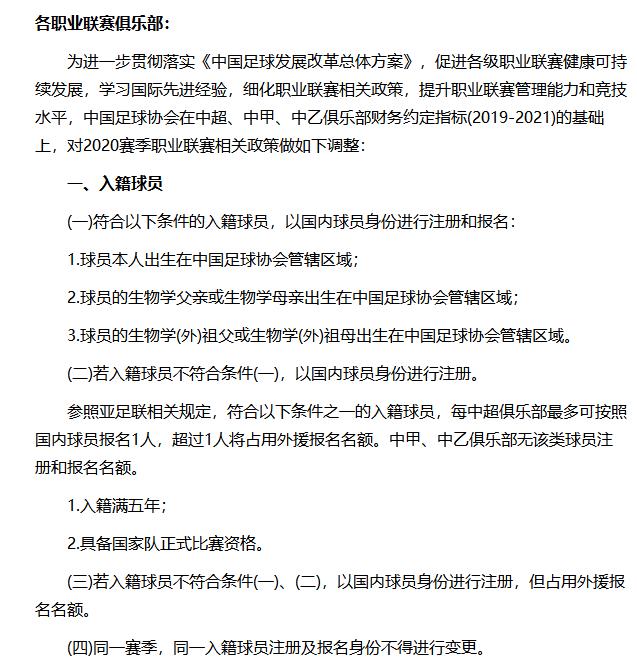
  China Football Association’s New Deal on Domesticated Players. Image source: China Football Association official website screenshot.

  Domesticated player appearance policy, taking care of many feelings

  On December 25th, China Football held a briefing on the policy of professional league in the new season, and announced various new policies for the new season to the representatives of various clubs, but the specific rules and the new policies on the appearance of naturalized players were not among them. After a lapse of six days, the new season policy was officially released. Compared with the contents of the previous briefing, the biggest supplement is the entry policy of naturalized players.

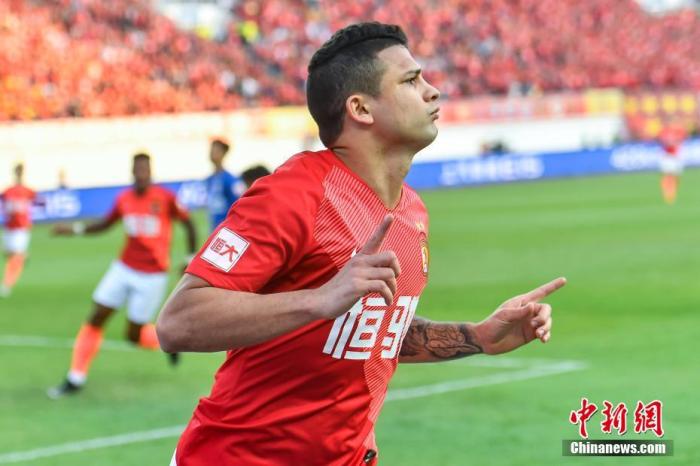
  Generally speaking, if naturalized players are Chinese players, they can register and register as domestic players, such as Li Ke and Hou Yongyong of Beijing Guoan and Jiang Guangtai of Guangzhou Evergrande, and their appearance and registration will be unrestricted next year. Non-Chinese naturalized players like Daniel F. Akerson can also register for domestic players next year, but each team has only one place, and more than one person will occupy the foreign aid registration places.

  Compared with the previous inference that non-Chinese naturalized players are included in foreign aid, the new policy that officially landed today is more relaxed in terms of naturalized players, but it remains within a reasonable range. At the same time, it also takes into account the feelings of Evergrande, a big naturalized family, and most teams that have not yet naturalized players, avoiding the gap between top teams and ordinary teams in the Chinese Super League and ensuring the wonderful degree of the league and the competition between teams.

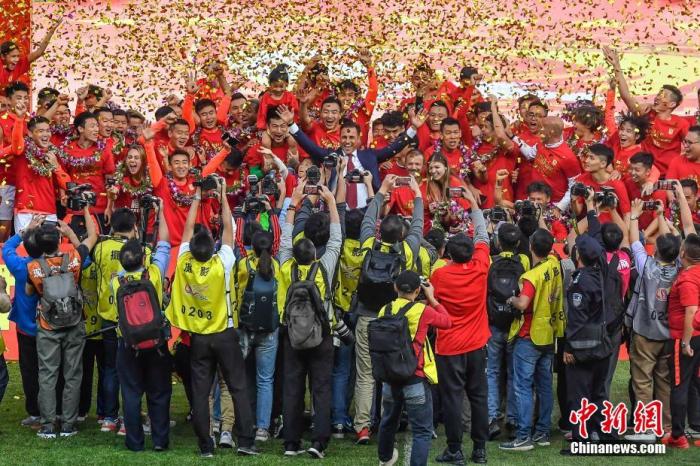
  Data Map: On December 1st, in the final round of the 2019 Super League, Guangzhou Evergrande beat Shanghai Shenhua 3-0 at home, and the team won the Super League championship for the eighth time. China News Service reporter Chen Yushe

  The "salary limit order" of the New Deal is meticulous and reasonable

  Compared with the previous policy briefing, the policy on player salary limit is more detailed. For example, the total pre-tax salary contract signed by domestic players with the club after November 20, 2019 shall not exceed RMB 10 million, including signing fees, real estate, vehicles and stocks. Players selected for the national team can not exceed 12 million RMB.

  It is worth mentioning that the Football Association has also clearly defined the criteria for the identification of international players, based on the final registration list of each game participating in the World Cup, the Asian Cup, the World Cup preliminaries and the Asian preliminaries, which prevents players from entering the national team to "rinse water" and raise their salaries, so that players who really contribute to the national team can have a higher salary ceiling.

  Data Map: On December 1st, Beijing Zhonghe Guoan player Zhang Yuning (left) shot in the game. China News Service reporter Futian photo

  In addition, in terms of salary limit for U21 players, the China Football Association has also given a clear limit, playing in the Super League and the FA Cup for more than 900 minutes; Cumulative playing time in China A and FA Cup exceeds 1800 minutes; U21 players who have played for more than 2,700 minutes in China B League and FA Cup are not subject to the pre-tax annual salary limit of 300,000. Through the consideration of different playing time standards in different levels of leagues, young players with real ability can get matching salaries. For young players who are limited by salary, they also have more motivation to improve their level and study abroad.

  Data Map: Guangzhou Evergrande Team won the Super League championship for the eighth time in its history. China News Service reporter Chen Yushe

  "Fire extinguishing" while keeping the heat.

  Judging from the operation of Chinese Super League teams in introducing tens of millions of euros of foreign aid and nearly 100 million yuan of domestic players in recent years, there is a premium phenomenon in domestic leagues. According to the statistics of foreign authoritative organizations, the average annual salary of Chinese Super League players is US$ 1.207 million, which is second only to the five major European leagues in football. However, from the perspective of league viewing and the average level of players, there is still a big gap compared with the sixth league in the world. Moreover, the long-term spending beyond one’s means will also be a hidden danger for the long-term development of football in China.

  In this context, it is the general trend to "put out the fire and cool down" domestic leagues, but how to keep the league hot while putting out the fire has also become a difficult problem to control.

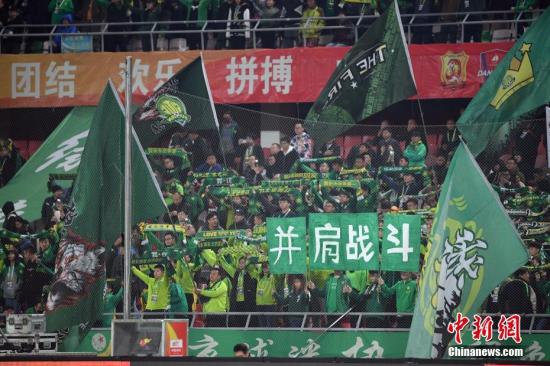
  Previously, the high investment still played a certain role in driving the popularity of Zhongchao. The data map shows Beijing Zhonghe Guoan fans. China News Service reporter Mao Jianjun photo

  Judging from this year’s New Deal, the Football Association did not completely put out the fire with a pot of cold water, but retained a certain degree of heat. For example, if the foreign aid policy is released to 5 newspapers and 4 newspapers, the policy of having one non-Chinese naturalized foreign aid for each team ensures the enjoyment of the league, and controlling a certain number of naturalized players can also provide some reinforcements for the national team. After all, the moderate use of naturalized players will still help China football.

  A new policy put an end to the unsatisfactory 2019 of China football. At the end of winter 2020, with the restart of the new season league, China football will officially enter a new cycle. I hope that this year will be fruitful, and I hope that the new policy can help China football get on the right track as soon as possible. (End)